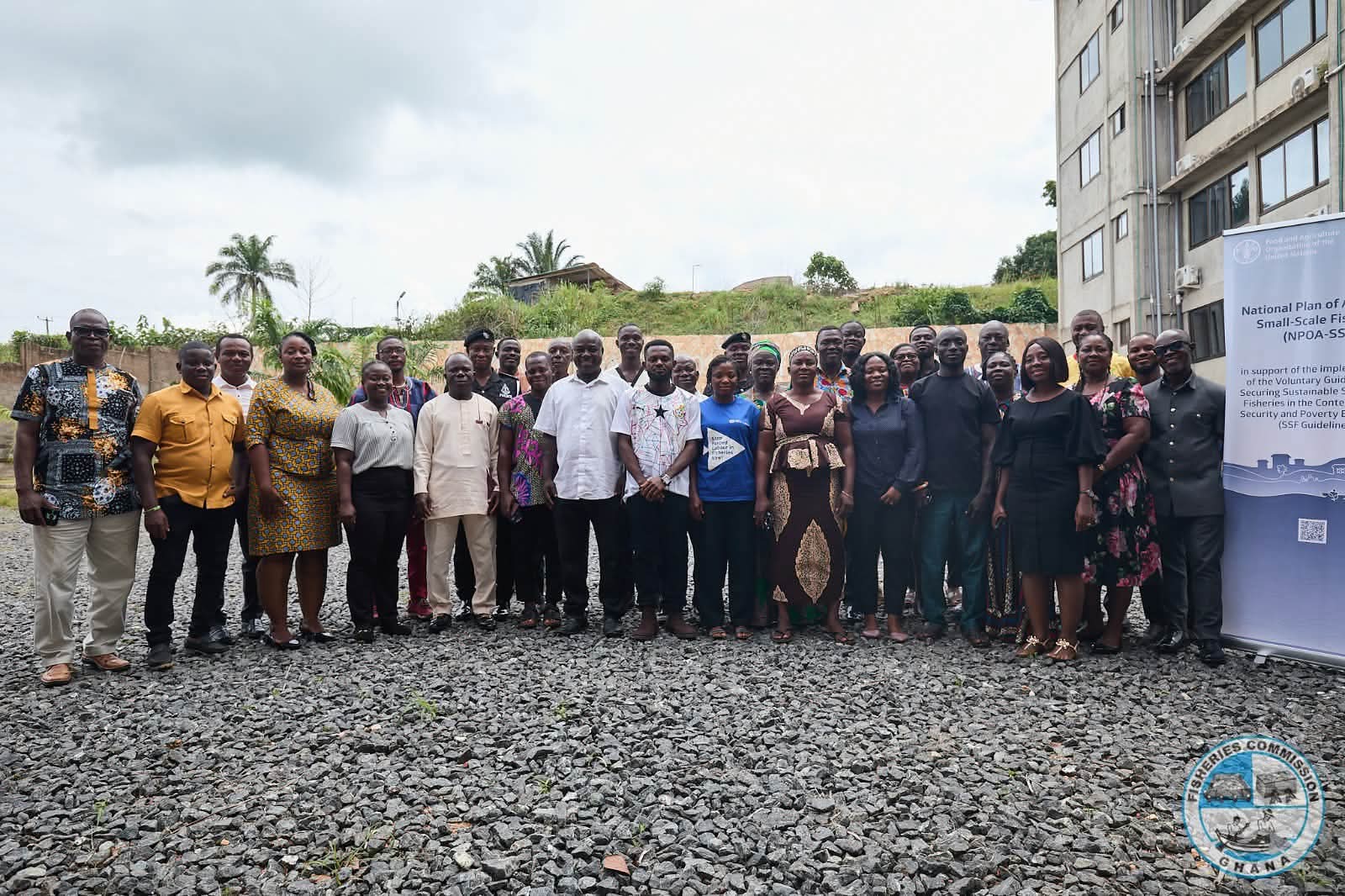
Fisheries Commission in partnership with the Food and Agriculture Organisation (FAO) held a workshop on co-management structures and local governance frameworks in Ghana’s inland waters at Skyplus Hotel, Ho from 23rd – 24th June, 2026.
FAO under the project, “Enhancing equitable, climate-resilient and sustainable Small-Scale Fisheries (SSF) through the SSF Guidelines implementation” seeks to build on the previous work done on co-management structures to formalise and operationalise co-management in three communities, including; Dzemeni, Akateng and Tapa Abotoase.
Fisheries Commission with support from the FAO piloted co-management awareness and structure creation in Dzemeni, Akateng, and Tapa Abotoase in 2023. The structures were based on the governance arrangements in line with the National Fisheries Co-Management Policy and the Voluntary Guidelines for Securing Sustainable Small-Scale Fisheries (SSF Guidelines).
The Oti Regional Director of the Fisheries Commission, Mr. Wendell Quartey-Papafio, on behalf of the Volta Regional Director in his welcome address noted that the Volta Lake sustains the livelihoods of thousands of households in the region, but faces growing pressure from overfishing, illegal fishing practices, gear conflicts, and environmental change. “No regulation crafted in an office can substitute for the knowledge and collective commitment of the men and women who fish these waters. That is why your presence here today matters”, he added.
Participants were taken through the benefits of Co-Management Committees inland fisheries resource management, National legal framework for co management structures in Ghana, Co-management Structures and Governance Framework: Asuogyaman District Co-management bye laws.
Representatives from Dzemeni, Akateng, and Tapa Abotoase delivered presentations on the status of the 2023 comanagement activities and what has changed since 2023 including; gear use, conflicts, water levels, other issues in their various communities.
Participants were tasked to deliver a refreshed recognised co-management committee set up, which must be based on the 2020 National Co-management Policy and the Proposed 2026 Regulations. They were also tasked to develop a co-management action plan for the inland fisheries sector which must include targets, responsibilities, timelines and capacity needs.
In his closing remarks, Mr. William Agbenu, Volta Regional Director of the Fisheries Commission expressed his profound gratitude to the FAO for their continuous support, and stressed that the action plans developed will only succeed if stakeholders reflect the realities on the ground and carry full ownership of the communities they serve for a sustainable inland fisheries sector.
Participants reaffirmed commitment to setup co-management committees and operationalise co-management in Dzemeni, Akateng, and Tapa Abotoase.