Kam Raj Pant
For billions worldwide, agriculture fulfills their needs for food, fiber, and fuel, among other necessities. Such a broad range of activities, challenges, and innovations is what makes it a fascinating subject to write narratives about. Today realities such as climate change, food insecurity, sustainable development, and many contentious issues, there is a growing urge to tell agricultural stories in a captivating fashion.
In this essay, the role of visual aids such as images, artwork, and captions in developing these narratives will be discussed. Thus, visual narrative is very helpful to the audience in grasping the meaning of such complex agricultural practices most especially with the use of pictorial illustrations.
Photographic Function
Photographs are one of the simplest and most efficient tools that can explain any subject, including agricultural-related topics. It has all the elements of farming, its struggles and feelings, and the actual lives in it. Pictures can capture places, such as expansive landscapes, crops, portraits of farmers, and the implements they hold. Portraits of farmers going about their activities in the fields tend to humanize and pump life into agricultural procedures.
- Recording Facts
Through photography, photographers depict the life of agricultural societies, emphasizing the everyday challenges and beauty of growing food. They make visual statements on the coexistence of man and nature by presenting age-old traditions in unspoiled surroundings.
- Arousing Feelings
In general, images create a deep impression on the audience and help them relate to society’s themes such as farming in the narratives. For instance, images of crops affected by drought may quickly tell a story of climate change dangers on food security. This has a motivational factor in people making them lobby, donate, or advocate for sustainable policies.
- Sharing Knowledge
To add on, the art of photographing not only appeals to feelings but also gives education. For instance, if a person has never known what it means to farm she/he can be assisted with a series of photographs showing him/her how crops are grown and taken care of until the harvesting stage. This is because, without simplification, the viewer is taught something new by such incomprehensible practice processes.
Visuals: Diagrams, Flowcharts, and Plans
Maps, graphs, and infographics enhance the narrative on agriculture, while pictures reproduce the real state of things. Such elements facilitate the process of presenting the data in forms that can be read, easily identifying patterns, similarities, and relationships in agricultural policies and activities.
- Picture Arrangements
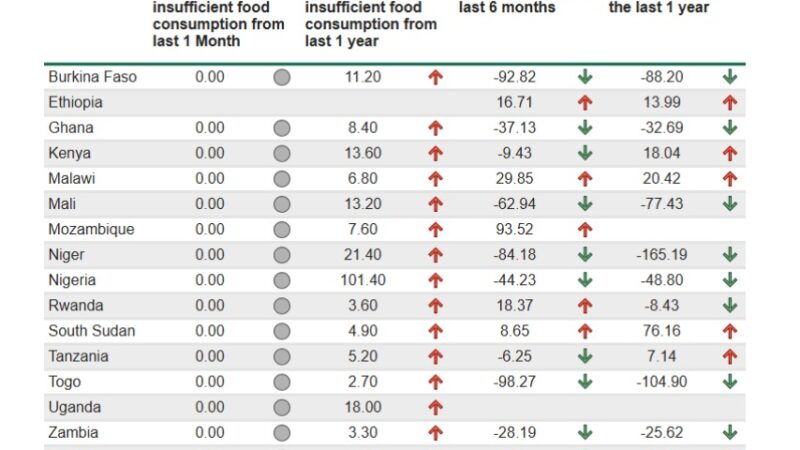
Data visualizations, such as the ones incorporated in this review, help interpret difficult information. For instance, the FAO (2021) uses a bar graph signifying the level of production of different crops from different regions and allows us to understand the climate-resilient aspects of agriculture. Also, the pie design showing the proportion of agricultural subsidies is great for the quest for justice about the resources in focus.
One example of this is the use of graphs in the “Global Agriculture Towards 2050” research conducted by the Food and Agriculture Organization (FAO) of the United Nations. This study incorporates graphical representations such as charts to anticipate the agricultural production levels and the corresponding food demands that will be experienced.
- Routes
Given the latitude with which we can now picture agricultural data, we can thank Geographic Information Systems (GIS). For example, maps can be used to show different crops grown, the distribution of such crops, and how climate variation impacts different regions. Heuristic maps can look at the regions where the issue of climate change is most pronounced, for example; drawing a heat map of this nature would show the critical nature of the issue in those regions.
One of the remarkable examples of the use of mapping in agriculture is the “Atlas of Global Development” developed by the World Bank. This atlas enables one to perceive agricultural trends around the world depending on land use, food security, and agricultural output which is instantaneously integrated through diverse maps.
Guide to Writing Captions
The stories of agriculture are also presented through visual mediums which is complemented by the concept of captions. Captions are not that easy to write, precision of ems and other aspects come into play when writing captions.
- Accurate Description
Captions are given to every image to give it the same meaning as the text. The higher the level of the figure, the easier it is for the target audience to see its importance. For instance, taking a picture of a farmer harvesting crops, one can write when the farmer is working, which crop, where, and that enhances the picture narrative.
- Background Information
Subtitles serve as an additional medium enhancing the audio of images by enabling the audience to gain an insight into the issues being spoken about about agriculture as a field. Including, the caption an image that shows the decrease in the number be bees and how that will affect agriculture production- touch the crops that require the services of these insects. This brings in the discussion on the aspect of agriculture and the number of plant species present.
- Witty Expressions
Captions should be designed in such a way that they stir the readers’ curiosity and motivate them to continue reading. One such means of achieving this is the use of storytelling techniques that evoke strong emotions or even fascination. To give the visual story a face, a caption may also include a line from a farmer describing his or her perceptions on climate change.
- References
However, with the modern trends of fake news, it is even more important for captions to attribute specific sources correctly, especially under statistical data. This is done to improve the integrity of the work and to give the audience some more insights. This can be done for example by including a figure citation in the caption of a graph showing the agricultural output for the last ten years. This would encourage readers to look into the material more.
Research on Real World
Several examples that make good use of photography, artwork, and captions can show how powerful visual storytelling can be in the agricultural sector.
- World Resources Institute (WRI)
Papers produced by the WRI often carry impressive images, maps, and figures. When working on the issue of sustainable land management, texts incorporate pictures depicting the negative environmental consequences resulting from rapid industrial agriculture, and the sustainable practices that combat these effects. The captions allow the audience to appreciate the pictures and the role of farming in sustainable development.
- Discovery Channel
National Geographic, a magazine best known for its mesmerizing photographs, also carries articles on food systems and agriculture. Such texts are often supported by well-designed infographics and excellent pictures, which break down complex issues like industrial agriculture or food waste. Entertaining captions are intended not only to inform but also to challenge the reader about the bigger picture: that of the entire agro-ecosystem.
- Food and Agriculture Organization
Maps, statistics, and images are commonly found in publications of the FAO. Take, for instance, their works concerning food security whose focus is the affected populations, and also show graphs and charts to portray trends. The captions in FAO papers allow the reader to appreciate the situation and acknowledge the importance of working together across borders to deal with agricultural problems.
Conclusion
In a rapidly changing world, it is important to use images, illustrations, and written text to tell agricultural stories. Images can enhance understanding, offer sentiments, and encourage audiences to take action on important issues within the agricultural space. It is through the complementarity of rich narrative, precise visual aids such as graphs and maps, and fitting photography that a gripping story is told which can connect to people in any walk of life.
We must embrace visual storytelling if we are to raise awareness, grasp the issues, and find sustainable solutions to the complex problems that we continue to confront in agriculture.
(Mr. Kam Raj Pant is the international editor at the Daily Agric News)