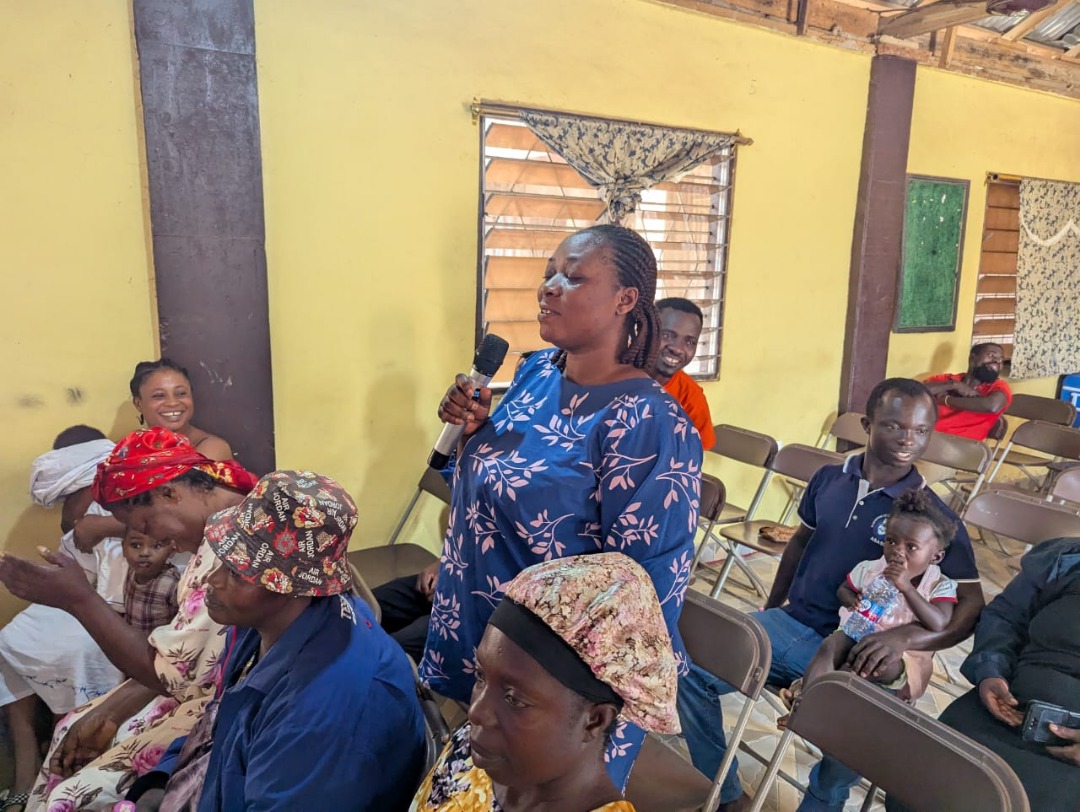
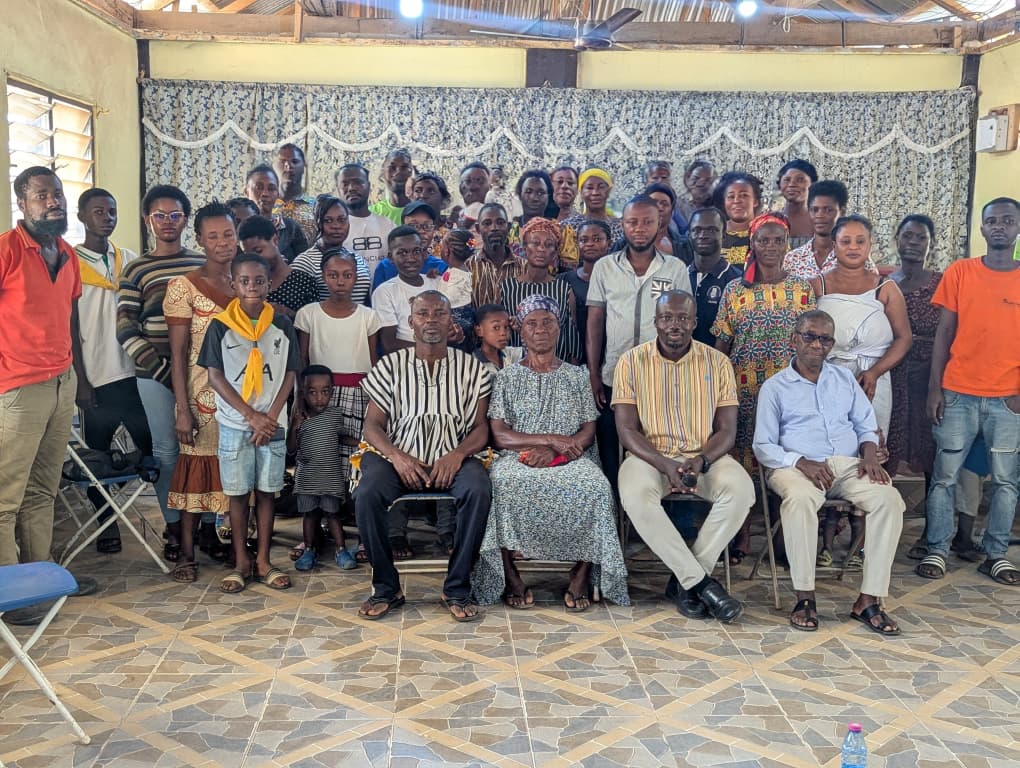
Namasua, Bono Region – September 5, 2025 – The Agroecology and Circular Economy for Ecosystem Services (ACE4ES) Consortium brought together lead farmers and stakeholders from Ashanti and Bono regions to Namasua in the Bono Region, for a sensitization workshop aimed at reducing harmful agricultural emissions while strengthening climate-resilient food systems.
The program addressed practical ways to prevent and reduce black carbon and nitrous oxide, particularly by discouraging open burning of residues and curbing excessive chemical inputs. Farmers were also introduced to methods for cutting methane emissions in rice fields, including the use of biochar and alternative wetting and drying (AWD) irrigation systems.
These approaches enhance soil health, conserve water, and contribute to reduced greenhouse gas emissions.
In lively discussions, participants shared indigenous methods of soil regeneration, emphasizing how traditional agroecological practices once supported healthier diets, cleaner air, and more reliable harvests without reliance on chemical inputs.
They called for a return to these knowledge systems as a foundation for food sovereignty and climate resilience.
To deepen this learning, participants were invited to visit the ACE4ES Multicultural Technology Park at CSIR-CRI, Fumesua. There, they will see firsthand how super pollutant mitigation technologies are being applied to foster improved air quality, climate gains, agricultural productivity, and soil health.
This workshop, supported by the Climate and Clean Air Coalition (CCAC), reflects ACE4ES’s ongoing commitment to blending indigenous wisdom and modern science to deliver farmer-led solutions for sustainable agriculture and climate action in Ghana and beyond.
Story by:
Nana Yaw Reuben