
The Deputy Minister for Food and Agriculture, John Dumelo, has called on Ghanaian youth to take advantage of expanding opportunities within Ghana’s agricultural sector, stressing that farming remains one of the most viable and sustainable business ventures in the country.
He discussed available financial packages from state agencies specifically designed for the youth.
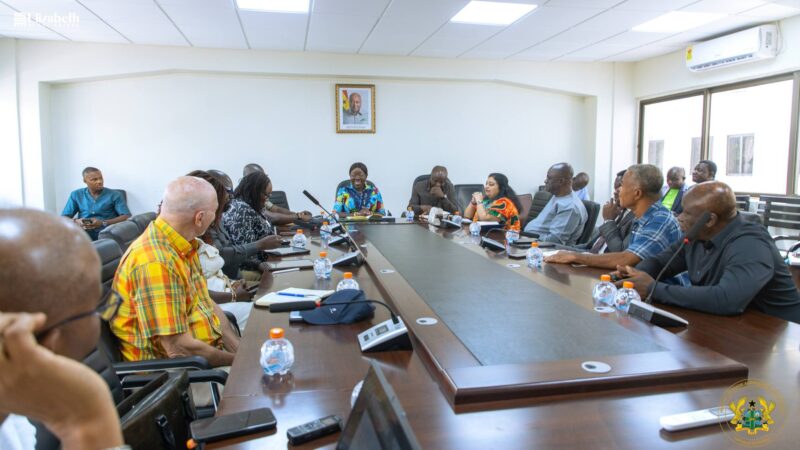
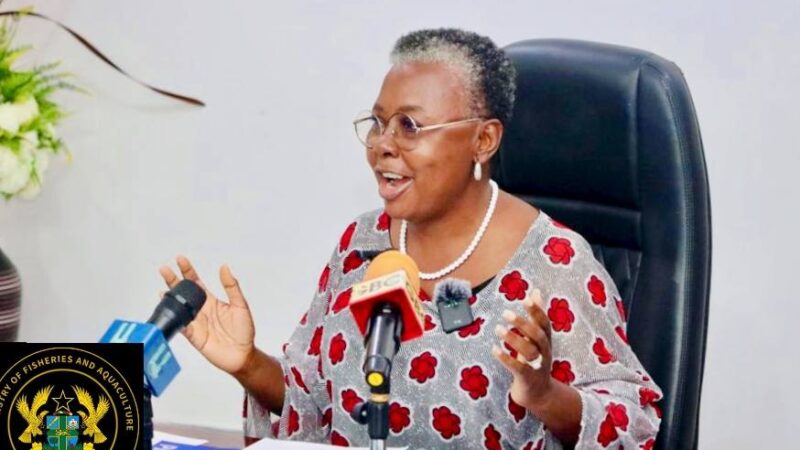
Addressing participants at a town hall meeting organized by The Ghanaian Farmer in partnership with the People Building Institute on Saturday, February 14, 2026, at the British Council in Accra, Mr. Dumelo emphasized that agriculture must be viewed not merely as subsistence work but as a serious and profitable enterprise.
He noted that government initiatives are increasingly structured to make the sector more attractive to young people, offering access to land, training, improved seedlings, mechanisation services, and financial support schemes.
“The National Youth Authority, Ghana Enterprise Agency, Outgrower Value Chain Fund (OVCF) at the Ministry of Agriculture, have money from donor partners, given to banks to lend to farmers. When you approach them with good plans after starting your farm already, it’s easy to get the loans and grants.”
According to him, young people interested in agriculture can engage with district agricultural offices, register with relevant farmer groups and cooperatives, and participate in government-backed programmes designed to support start-ups and agribusiness expansion.
“The opportunities are there,” he said. “From crop production to livestock, poultry, aquaculture, agro-processing and agritech, there is room for innovation and growth.”

Mr. Dumelo underscored the importance of repositioning agriculture as a modern business driven by technology, value addition and strong market linkages.
He encouraged the youth to explore dry season farming and areas such as greenhouse farming, irrigation, digital marketing of farm produce and food processing, which offer higher returns and year-round income potential.
“Dry season farming is the best. Sometimes when I go to the North, the market women prepay for produce before the farmer starts. Once you have your farm close to the water body, acquire a pump and you will make a lot of money,” John Dumelo advised.
He further highlighted that agriculture remains indispensable because of its central role in national food security and economic stability.
“People eat every day,” he stressed. “That alone should tell you that agriculture will always be relevant. It is not a seasonal business; it is a necessity.”
The Deputy Minister urged financial institutions and private sector actors to support young agripreneurs with affordable credit and mentorship, while also encouraging participants to adopt a long-term vision with workable plans when entering the sector.
Participants at the town hall were farmers, investors and agritech companies from various parts of the country. They engaged the Deputy Minister on issues including access to capital, post-harvest losses, market access and climate change resilience.
While addressing the disappearance of local seeds based on a question from a participant, he said climate change is a major factor. “That’s why we brought improved seeds to withstand Ghana’s temperature and rainfall patterns.
These seeds are not GMO. They’re locally produced for efficiency,” the Deputy Minister added.
Organisers of the program, The Ghanaian Farmer and People Building Institute said the forum formed part of efforts to bridge the gap between policymakers and young farmers, and to inspire more youth to see agriculture as a viable career path to create jobs and reduce unemployment.
They disclosed that the town hall meeting with policy makers will be replicated across the country.
Mr. Dumelo in his closing remarks assured the gathering of the government’s commitment to creating an enabling environment that makes agriculture not only productive but profitable for the next generation to tackle unemployment in the country.
Source: The Ghanaian Farmer