
Controlling weeds in a maize field using mulching boards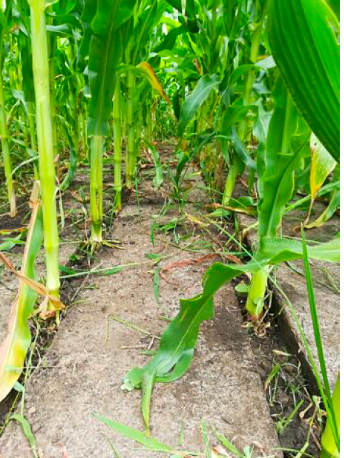
In an era where climate change and soil degradation pose significant threats to agricultural productivity, effective mulching technologies have become increasingly crucial for sustainable farming. Mulching, a practice that involves covering the soil with various materials to enhance crop growth conditions and provide cover to the topsoil, has become increasingly vital in modern agriculture. Farmers worldwide grapple with escalating water scarcity, unpredictable rainfall patterns, rising temperatures, and increasing soil erosion. Traditional mulching methods, while effective, often involve significant labor costs and may not be sustainable under heavy runoff and windy conditions in the long term. Additionally, the disposal of agricultural waste presents an ongoing environmental challenge in many farming communities.
Against this backdrop, Dr. Kwame Sarpong Appiah, a researcher at the Department of Crop Science, University of Ghana, has engaged in research to develop and evaluate the effectiveness of mulching boards from plant residues. In the research article on the “Development and Evaluation of Mulching Boards Fabricated from Bagasse,” Dr. Appiah explored a sustainable solution using sugarcane waste. The research demonstrated that sugarcane bagasse, typically a waste product from sugarcane processing, can be transformed into effective mulching boards. This study showed that mulching boards have superior moisture retention capabilities compared to traditional mulching methods and have extended durability in field conditions.
The subsequent publication, “Evaluation of the Effectiveness of Loose and Compressed Wood Chip Mulch in Field-Grown Blueberries—A Preliminary Study,” provided valuable insights into mulching efficiency in high-value crop production. The research highlighted the comparative performance between loose and compressed wood chip applications. The mulching boards had an impact on soil moisture retention and temperature regulation and effectively suppressed weed growth. Research by other researchers, including Prof. Siaw Onwona-Agyeman, an Associate Professor at the Tokyo University of Agriculture and Technology, has shown that mulching boards are superior to other organic mulches in terms of soil pore structure formation and aggregate stability regardless of the soil type.
Controlling weeds in a maize field using mulching boards
These research findings are particularly relevant to Ghana’s agricultural sector, where farmers face multiple challenges. The intermittent drought in certain parts of the country affects crop growth and yields. Additionally, there are rising labor costs for weed control and soil degradation due to intensive farming practices. The mulching boards offer a sustainable solution for the management of agricultural industrial waste, such as sugarcane bagasse, while solving the problem of weeds and soil degradation. The implementation of these researched mulching solutions offers transformative advantages for Ghana’s agricultural sector. Farmers adopting the use of these mulching boards can expect significant reductions in water consumption across their farming operations, leading to more sustainable water usage and reduced irrigation costs. The innovative mulching approaches substantially decrease labor costs typically associated with weed control, allowing farmers to allocate resources more efficiently.
The research opens new economic opportunities, particularly for sugarcane processors who can now transform waste products into valuable agricultural resources. This innovation creates an additional revenue stream while addressing waste management challenges. The consistent soil temperature and moisture levels maintained by both the bagasse boards and optimized wood chip applications create ideal growing conditions that enhance overall crop quality and production efficiency.
Field trials have demonstrated marked improvements in soil health and crop yields, with mulched areas showing superior moisture retention and reduced soil degradation. Furthermore, the quality of crop production has shown notable improvement under these mulching systems. The consistent soil temperature and moisture levels maintained by both the bagasse boards and optimized wood chip applications create ideal growing conditions that enhance overall crop quality and production efficiency.
As Ghana’s agricultural sector evolves, these evidence-based solutions offer a sustainable path forward for farmers. The implementation of mulching boards not only addresses immediate farming challenges but also contributes to the broader goal of sustainable agriculture in Ghana.
The research on mulching boards continues to demonstrate that innovative approaches to agricultural challenges can yield multiple benefits, from improved crop yields to better environmental stewardship. As climate change continues to impact farming practices, such sustainable solutions become increasingly vital for the future of agriculture in Ghana and beyond.

Dr. Kwame S. Appiah, University of Ghana
By: Clinton Gyabeng
M.Phil. Student, University of Ghana






This agricultural project is very well done and clearly shows a lot of hard work. It’s great to see smart ideas being used to grow more while taking care of the land. Congratulations.
This farming project is very well done and clearly shows a lot of hard work. It’s great to see smart ideas being used to grow more while taking care of the land. Congratulations.