Every few years, a new saviour arrives for Ghana’s beleaguered rice sector — a new government programme, a fresh injection of donor cash, a shiny new agricultural strategy — and every few years, the same story repeats itself: money disappears, promises evaporate, and millions of Ghanaians keep eating imported Thai and Vietnamese rice while local farmers wonder where it all went wrong.
Now comes a GH₵35 million pledge from the Japan International Cooperation Agency (JICA) to establish a rice seed production plant in Northern Ghana. Agriculture Minister Eric Opoku announced it with the familiar fanfare, promising it would “make a significant contribution to Ghana’s rice subsector” and help deliver on President Mahama’s Feed Ghana Programme vision. He even pledged the government’s “judicious utilisation” of the funds.
We have heard that before. Almost word for word.
The question that no minister, no association, and no donor briefing ever answers is this: where did all the previous money go?
A Sector Drowning in Strategies, Starved of Results
Ghana does not suffer from a shortage of rice policy. It suffers from a catastrophic excess of policy and a catastrophic shortage of accountability.
The country has had the National Rice Development Strategy (NRDS I), then NRDS II — revised in 2019 and so neglected it was only validated in 2024, five years later. Before those, there were Planting for Food and Jobs. Now the Feed Ghana Programme. Each administration repaints the same crumbling wall and calls it a new building.
The results speak for themselves. Ghana spent GH₵3.05 billion on rice imports in 2024 alone — GH₵1.98 billion on milled rice and another GH₵1.07 billion on broken rice, according to the Institute for Fiscal Studies (IFS). Rice imports for the 2024/2025 marketing year could reach 950,000 tonnes, a staggering figure for a country that has been promising rice self-sufficiency since the 1980s. Per capita rice consumption has exploded from 12.4 kilograms in 1980 to over 61 kilograms in 2022, and domestic production has barely kept pace.
Average rice yields in Ghana range from just 1.1 to 3.3 metric tonnes per hectare. In Vietnam, they achieve 6 tonnes. This is not a gap. It is an indictment.
The IFS, in findings that should embarrass every agriculture official who has drawn a salary over the past three decades, attributes low productivity to four persistent failures: low fertiliser application, ineffective seed systems, limited mechanisation, and inadequate irrigation infrastructure. None of these are new discoveries. All of them have been “addressed” by programme after programme. None have been solved.
The Original Sin: Killing the Seed Company and Calling It Reform
Ghana’s seed sector dysfunction has a precise origin story. In 1989, during the Structural Adjustment Programme (SAP), the Ghana Seed Company was dismantled and seed production was privatised. The theory was that the private sector would be more efficient. The practice was the opposite.
As research published by the IFS makes clear: “The intention was to make the private sector more efficient in seed supply, but the outcome has been the opposite.” Without state coordination, the private sector stagnated. The formal seed system today supplies less than 20% of total seed demand. The remaining 80% is met through informal sources — farmer-saved seeds, local market purchases, and seed exchanges — of wildly varying quality.
This is not a footnote. This is the central catastrophe of Ghanaian rice agriculture. A country that dismantled its seed infrastructure in the name of market efficiency and spent the next 35 years watching the market fail.
The Seed Associations: Promises, Poor Quality, and Missing Accountability
Ghana’s seed association have benefited from government subsidies, donor project funding, USAID support through the ADVANCE programme, World Bank grants through WAAPP, AGRA, EU and French development agency (AFD) projects, and countless other interventions. The result? Farmers still cannot reliably access quality certified seed when they need it.
The failure is systemic and well-documented. Research has identified thirteen fungal genera associated with rice seed samples collected from farming districts in the Western North Region alone. Farmer-saved seeds — what most Ghanaian rice farmers are still using because certified seeds are unavailable, unaffordable, or unreliable — show alarming levels of seed discolouration and disease contamination. One study found that the AGRA rice variety, a farmer-saved seed, had the highest level of seed discolouration of any sampled variety, with pathogens including Bipolaris spp., Fusarium spp., and Aspergillus spp. infecting grains both in the field and in storage.
Meanwhile, the formal seed system has proven it cannot even meet government demand. When the Ministry of Food and Agriculture solicited certified seeds for the first year of the Planting for Food and Jobs programme, the country’s seed producers could supply only 2,645 metric tonnes of rice seed out of the 4,860 metric tonnes requested — a shortfall of over 45%. For an industry that has received decades of support, this is not underperformance. It is collapse.
The USDA’s own assessment describes Ghana’s seed industry as being “in its infancy” — a remarkable verdict for a sector that has consumed enormous donor and government resources over decades. Seven challenges have been catalogued as undermining the sector: limited capacity of public institutions, constrained private sector capacity, absence of fair and enforceable contracts, land-tenure limitations, poor demand forecasting, thin marketing arrangements, and the concentration of seed supply power in the hands of too few institutions.
These are not new problems. They are the same problems identified ten years ago. And twenty years ago.
Where Is the Money? The Scandal Hiding in Plain Sight
In 2024, the Ghana Audit Service dropped a bombshell: the government had paid for 34,000 metric tonnes of rice under a food distribution programme to support communities hit by drought. Only 24,000 metric tonnes were received. Ten thousand metric tonnes of rice — paid for with public money — simply vanished.
The Peasant Farmers Association of Ghana (PFAG) was livid. “We are extremely disappointed, we are extremely sad and I’ll be extremely worried and disappointed if those who have perpetrated this evil against our farmers are not brought to justice,” declared Bismark Nortey of PFAG. PFAG called for the recovered funds to be channelled into irrigation, storage infrastructure, and productivity-enhancing projects.
Whether those responsible have faced justice remains, as of this writing, unclear. What is clear is that this rice scandal is not an isolated incident. It is a symptom of an agricultural sector where donor funds, government support, and subsidy programmes flow in and accountability flows out — leaving farmers, consumers, and taxpayers holding an empty bag.
The Associations: Grand Names, Quiet Disappearances
Ghana’s rice sector boasts an impressive collection of organisations. There is the Ghana Rice Inter-Professional Body (GRIB), incorporated in 2014 as the national umbrella for rice stakeholders. There is the National Seed Trade Association of Ghana (NASTAG). There is the Association of Rice Producers and Millers, the Association of Parboiled Rice Millers, and others.
At any given policy meeting, they appear in force. They release communiqués. They demand tax exemptions and levy reductions. They organise festivals and workshops. The Ghana National Rice Festival ran from 2017 through 2022 with slogans like “Eat Ghana Rice” and calls for Ghanaians to “see farming as a business and not a punishment.”
But between the workshops and the press releases, outcomes are scarce. GRIB itself was described in 2019 as having been “almost dormant” for four years before external funding from the Kufuor Foundation helped revive it. The structural weaknesses within NASTAG — “limited early-generation seed production, poor demand forecasting, and thin marketing” — have been documented and acknowledged without resolution. The seed business centres GRIB promised to establish across Ghana’s key rice-producing areas largely remain aspirational.
Where are these associations when a farmer in the Upper East receives substandard seeds and loses a season? Where are they when certified seeds are unavailable at planting time? Where are they when the Audit Service uncovers 10,000 phantom tonnes of rice?
The pattern is clear: these bodies are most visible when lobbying for government concessions and least visible when demanding accountability from their own members.
Why GH₵35 Million from JICA Is Not a Panacea
Minister Eric Opoku’s announcement of JICA’s GH₵35 million pledge for a rice seed production plant in Northern Ghana has been received with the usual optimism that attends every new agricultural initiative in this country. The plant, we are told, will come equipped with modern machinery, improve timely seed production, strengthen national food security, enhance the skills of irrigation scheme officers, and train farmers in the use of new machinery.
These are worthy goals. But GH₵35 million — however welcome — cannot fix what ails Ghana’s rice seed sector, because the problem is not primarily a lack of a production plant. The problems are structural, institutional, and political.
First, Ghana has no shortage of facilities; it has a shortage of accountability. Donor-funded rice projects stretching back decades — through USAID, AFD, the World Bank, and JICA itself — have all included infrastructure, training, and institutional support components. They have not produced a self-sustaining seed industry. Without rigorous accountability mechanisms, this plant risks becoming another impressive facility that underperforms within years of commissioning.
Second, the seed distribution problem remains unsolved. Even if a new plant produces high-quality certified seeds, getting those seeds to smallholder farmers at the right time, at the right price, and in sufficient quantities has historically proven beyond the capacity of both government and the private sector. Research confirms that only 20% of seed demand is met through formal certified channels. A new plant adds supply capacity; it does not fix the broken distribution chain.
Third, the institutional environment remains dysfunctional. Ghana privatised its seed sector in 1990 without building the regulatory, contractual, and market infrastructure to make that privatisation work. Over three decades later, the USDA still calls the sector “in its infancy.” JICA money can build a plant, but it cannot build institutional coherence or enforce contracts between seed producers and farmers.
Fourth, corruption and accountability failures will not disappear because of a new facility. The disappearance of 10,000 metric tonnes of government-procured rice in 2024 is a reminder that Ghana’s agricultural sector is plagued by governance failures that no external investment can remedy without internal reform. The Minister’s pledge of “judicious utilisation” of JICA funds is meaningless without independent auditing, transparent procurement, and enforceable consequences for diversion of resources.
Fifth, the broader structural failures persist. As the IFS notes, less than 3% of Ghana’s farmland is devoted to rice cultivation despite the country possessing abundant land. Irrigation infrastructure is inadequate. Mechanisation is minimal. Fertiliser application is chronically low. A seed production plant, however well-equipped, operates in an ecosystem of failure.
Japan’s generosity is not the issue. JICA has a strong track record in agricultural development across Asia and Africa. The issue is whether Ghana’s government has the political will and institutional capacity to use this investment differently than it has used every previous investment. The track record offers little grounds for optimism.
What Must Change
Ghana does not need another strategy document. It needs accountability.
It needs forensic audits of every donor-funded rice seed project of the last two decades, with published results and consequences for those who misspent or diverted funds. It needs enforceable contracts between seed producers and government, with penalties for under-delivery. It needs an independent oversight body with real teeth to monitor the utilisation of the JICA funds — not a ministerial pledge, but a statutory mechanism. It needs rice associations that function as genuine industry watchdogs rather than lobby groups that show up at budget hearings and disappear at harvest time. And it needs a government willing to confront the uncomfortable truth that decades of agricultural policy failure cannot be solved by the next GH₵35 million.
Ghana’s farmers deserve better seeds. Ghana’s consumers deserve affordable local rice. Ghana’s taxpayers deserve to know where their money went. And Ghana’s rice industry deserves leadership that matches the scale of the crisis with something more than another announcement.
Until then, the cycle will continue. The money will come. The promises will flow. And at the end of the season, Ghanaians will once again be eating rice from Vietnam.
SOURCE:
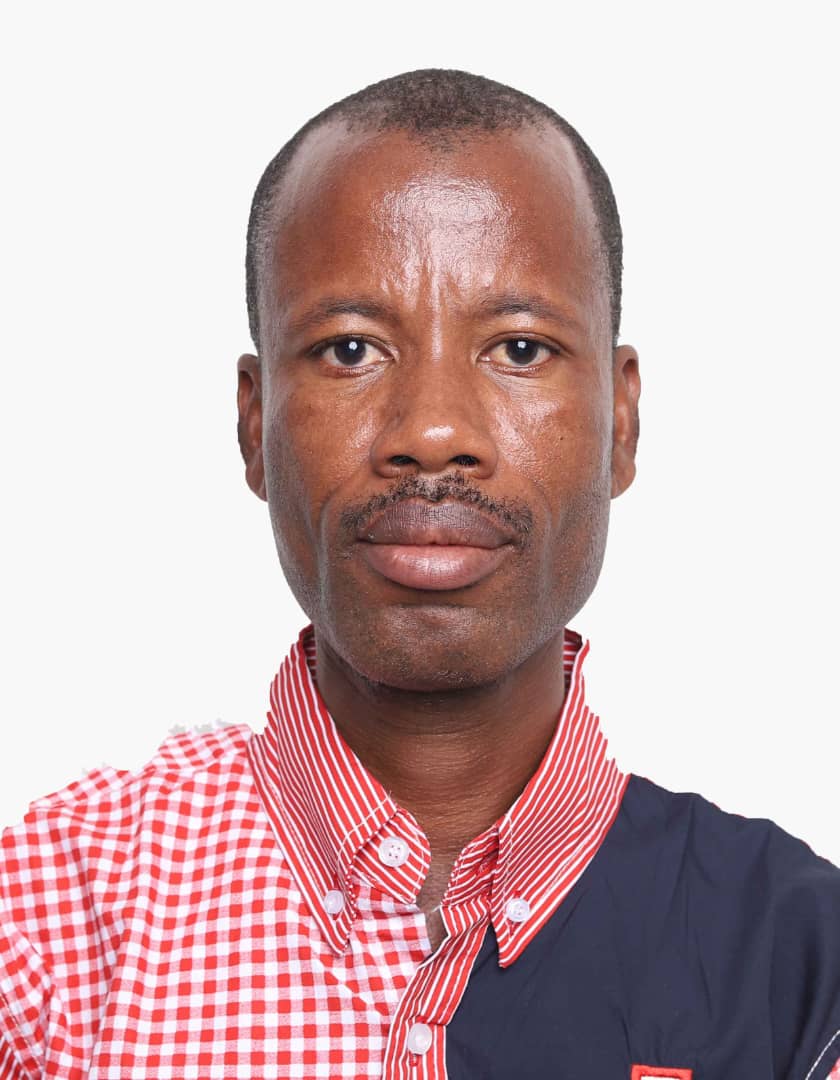
Amos Rutherford Azinu, PhD and a certified Seed Business Executive and a professional farmer