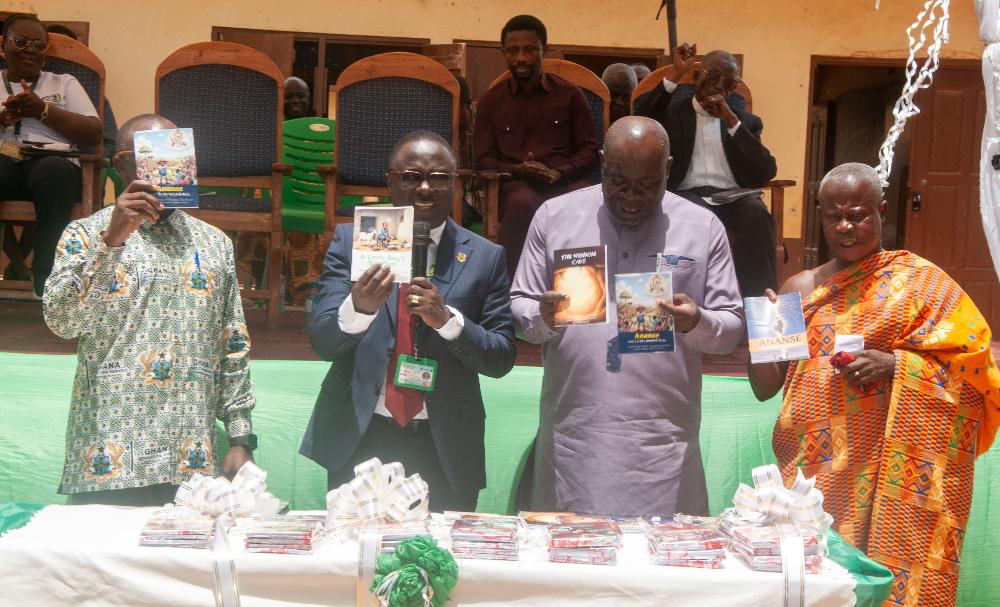
In a bold stride toward transforming childhood education in Ghana, the Kwame Nkrumah University of Science and Technology (KNUST), Kumasi, has launched five culturally rich storybooks under the Anansesem Museum Collection Project. The initiative represents a powerful convergence of literacy, culture, and nutrition — engineered to sharpen children’s reading skills, ignite a love for local novels, and nurture young minds through science-backed nutritional support.
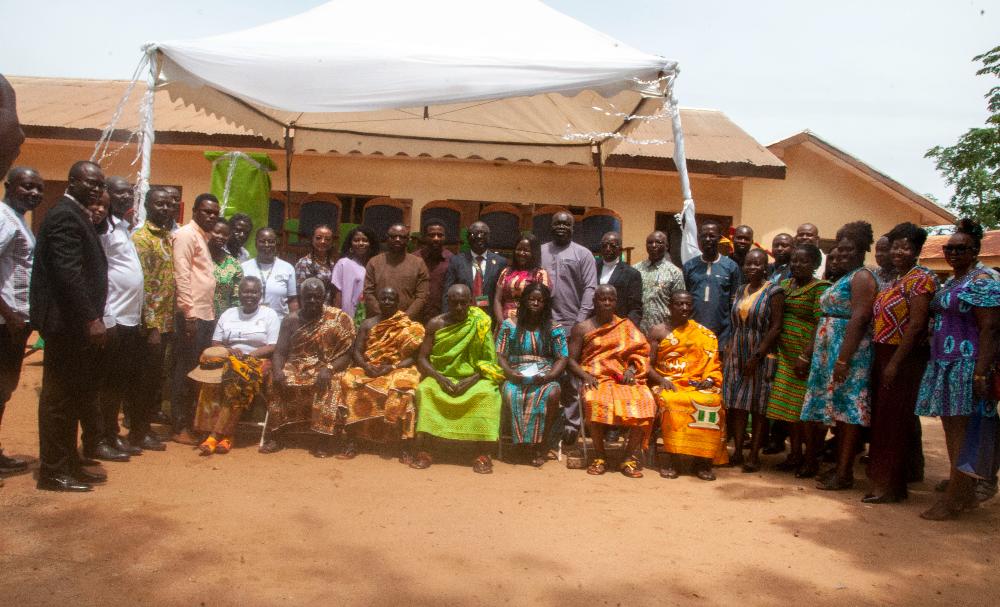
The launch ceremony, held at Kokoben M/A Basic School, was made possible through funding from the KNUST Research Fund (KReF). At its heart, the project rests on a visionary dual strategy: placing locally authored novels — deeply rooted in Ghana’s timeless storytelling heritage — into the hands of children, while simultaneously leveraging the remarkable cognitive benefits of Omega-3 enriched eggs to elevate literacy outcomes, especially among pupils in underserved rural communities.
Five Stories, One Powerful Vision
The five local novels unveiled at the event are Anansesem: The Origin of All Stories, Ananse: Ancestor of Intelligence, Ananse and the No-Scratch Rule, The Wisdom Cave, and A Little Boy’s Big Plans. Far from ordinary children’s books, these carefully crafted stories breathe new life into Ghana’s beloved Ananse folktale tradition, threading in modern themes of technology, agriculture, financial literacy, sustainability, and social responsibility. The result is a collection that speaks directly to the Ghanaian child — familiar in culture, yet forward-looking in vision.
A Vision Rooted in Research
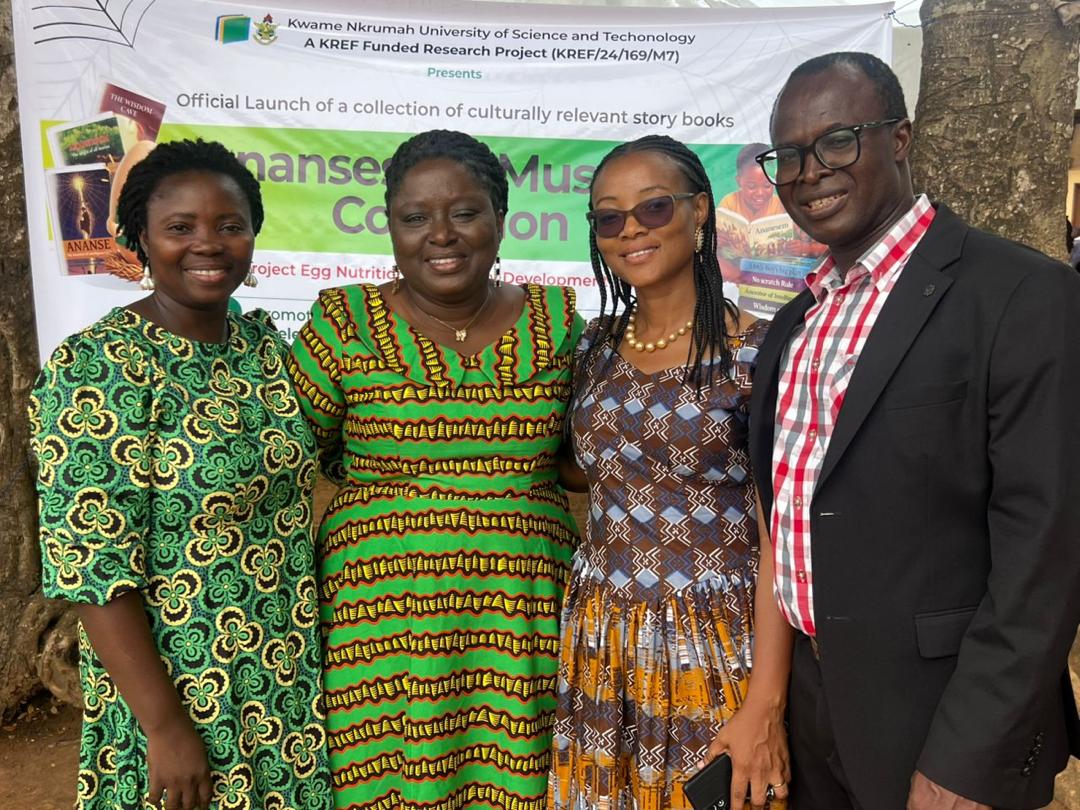
Dr Levina N. Abunya, the project’s Principal Investigator, captured the spirit of the occasion with quiet conviction. “Today, we are not only launching books; we are advancing a vision — one where children read with understanding, connect with their culture, and develop holistically,” she declared. She was emphatic that nutrition is not a side note in this programme but a central pillar. Omega-3-enriched eggs, she noted, form an essential bridge between a child’s physical nourishment and their intellectual flourishing. “This initiative is a call to action for stakeholders to support and scale programmes that ensure every child has access to relevant local reading materials and the nutritional support needed for their minds to thrive,” she urged.
The Man behind the Science: Prof. Jacob Hamidu
Perhaps no individual embodies the spirit of this project more profoundly than Prof. Jacob Hamidu, the team’s Lead Mentor and the original architect of the Omega-3 egg enrichment concept at KNUST. His journey dates back over a decade, to 2014, when he pioneered a groundbreaking nutritional research project at KNUST, funded by Grand Challenges Canada through its flagship initiative — “Saving Brains: Bold Ideas with Big Impact.” This globally recognised programme was designed to protect and unlock the potential of developing minds in low- and middle-income countries, and Prof. Hamidu’s work stood as one of its most practical and impactful contributions from the African continent.
At the launch, Prof. Hamidu articulated with passion and precision why the marriage of agriculture and social science is not merely convenient — it is necessary. He argued that these two disciplines hold a powerful synergy with the capacity to dramatically increase the nutritional intake of children in rural Ghana, where dietary deficiencies remain a silent barrier to learning. Eggs enriched with Omega-3 fatty acids and choline, he explained, are far more than a meal — they are a scientifically validated tool for building stronger brains, enhancing reading capacity, and driving up school enrolment in communities that need it most.
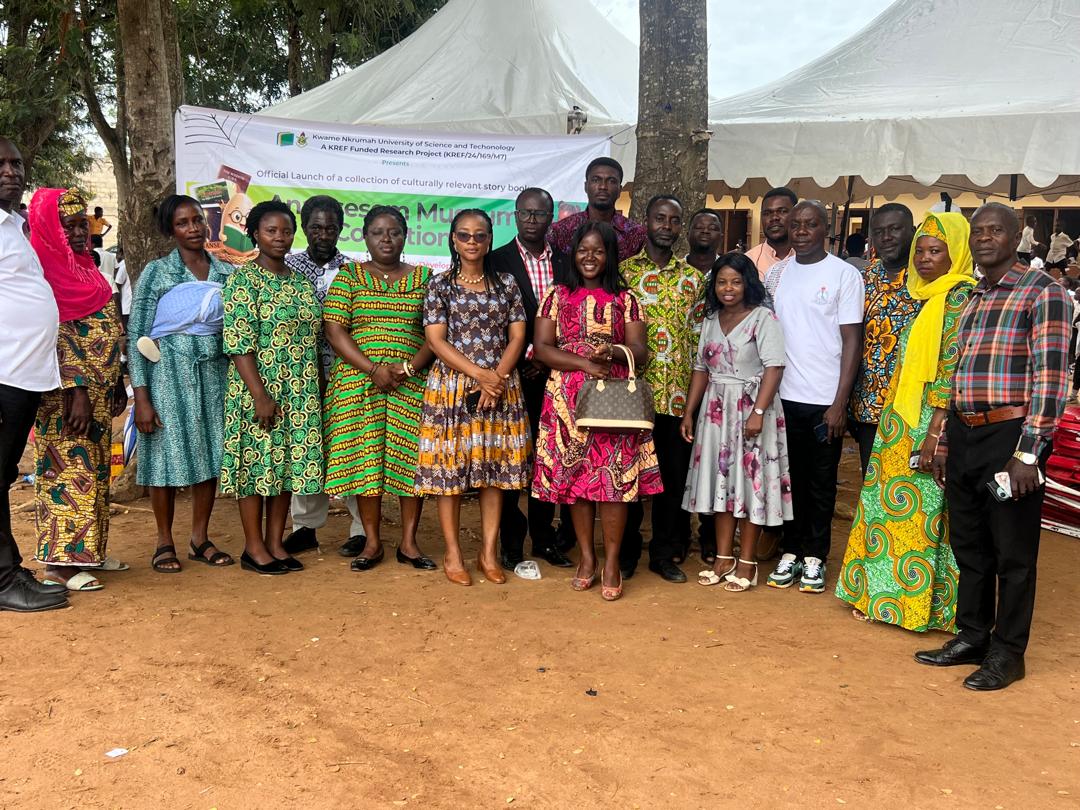
“Agriculture and social science, working together, can change the trajectory of a child’s life,” Prof. Hamidu stated. “Eggs containing Omega-3 fatty acids and choline have the proven power to boost cognitive development, improve reading performance, and increase school enrolment — and these outcomes are not isolated. They are deeply and inseparably connected.”
His decade-long dedication to bridging animal science, child nutrition, and educational outcomes provided the scientific bedrock upon which the Anansesem Museum Collection Project was built — making this launch not merely a book unveiling, but the flowering of years of rigorous, purpose-driven research.
Literacy and Nutrition: Two Sides of the Same Coin
Prof. Charles Marfo, Provost of the College of Humanities and Social Sciences (CoHSS), lent his voice to the project’s integrative philosophy. He affirmed that bringing literacy and nutrition together as twin engines of child development is particularly vital in less-endowed communities, where both are in short supply and both are desperately needed.
Prof. David Asamoah, Pro-Vice Chancellor of KNUST, offered a broader perspective on what this initiative represents for education in Ghana. “Education is most effective when it is contextual, inclusive, and supported by the right conditions for learning,” he said, commending the project team for their ingenuity and calling on parents, educators, and community leaders to rally around the initiative. “Let us carry forward the responsibility to support and sustain such interventions for the benefit of our children and communities,” he added.
Schools and Communities at the Centre
The Anansesem Museum Collection was officially launched by Prof. Asamoah alongside Prof. Marfo, a representative of the Chief of Kokoben, Nana Owusu Agyemang, and a representative of the Municipal Directorate of Education, Mr Sampson Kobinah-Erabanye — a symbol of the broad coalition of support the project has garnered across academia, traditional leadership, and government.
Five basic schools stand as the immediate beneficiaries of this initiative: Kokoben M/A Basic School, Bedaase D/A Basic School, Konkoma M/A Basic School, Korase M/A Basic School, and Sonsuaso M/A Basic School.
The Team
The storybooks were authored and produced through the collective effort of a multidisciplinary team: Dr. Levina Abunya (Department of Language and Communication Sciences), Prof. Jacob Hamidu (Department of Animal Sciences), Mrs. Irene Esi Nunoo (Department of Teacher Education and Publishing Studies), Mrs. Joann Thompson (Centre for Cultural and African Studies), and Dr. Francis K. Nunoo (Department of Publishing Studies).
Source: Prof. Jacob Alhassan Hamidu, Knust